
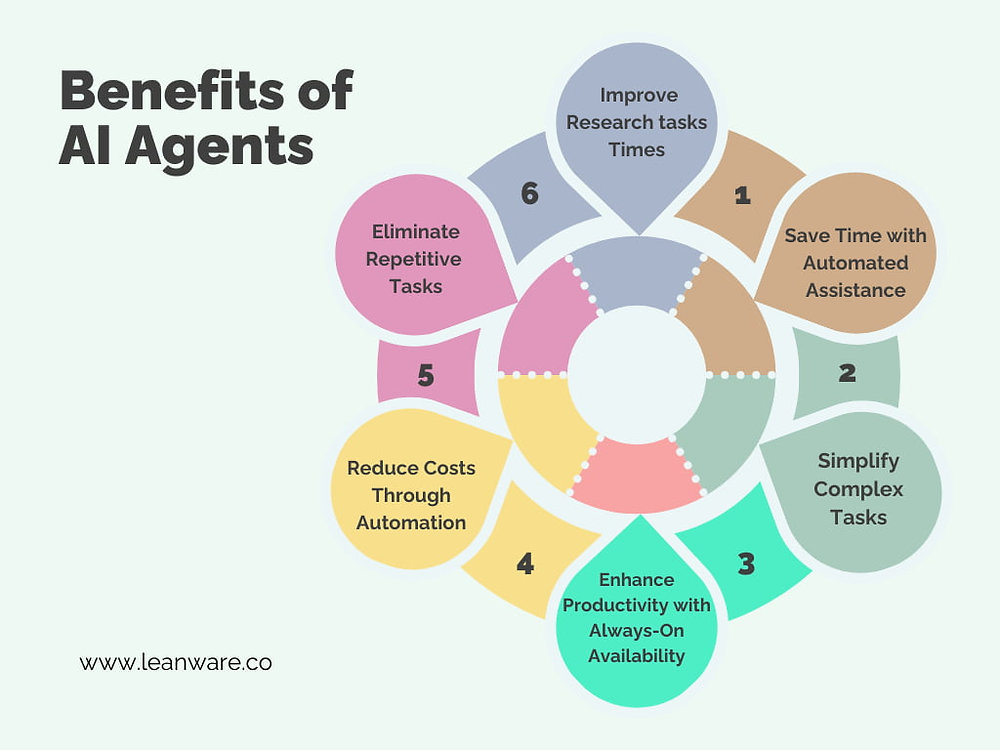
AI agents are quickly moving from hype to real operational value. Unlike traditional AI assistants that respond to prompts, AI agent tools are designed to take action: executing workflows, making decisions, coordinating across systems, and operating with a degree of autonomy once goals are defined.
In marketing and business contexts, AI agents are increasingly used to automate research, content operations, analytics, internal knowledge access, customer interactions, and cross-tool workflows. Some act as digital teammates embedded in existing platforms, while others serve as agent-building environments where teams design purpose-built agents for specific roles.
This review examines seven leading AI agent tools, based on public documentation, demos, product messaging, third-party reviews, and credible industry coverage. The list is unranked, reflecting the fact that “best” depends heavily on use case, existing IT infrastructure, and organizational readiness.
Sana Agents
How it works
Sana Agents are built on top of Sana’s AI-powered knowledge platform, enabling organizations to deploy agents that can answer questions, retrieve internal documents, summarize information, and take action across connected tools. Agents are trained on company-specific knowledge and can be customized for different roles, such as HR, sales, or operations.
Best for
Sana is best suited for mid-sized to large organizations that want AI agents deeply connected to internal knowledge bases. It’s particularly relevant for companies with distributed teams, complex documentation, or heavy onboarding and enablement needs across departments like HR, sales, and customer success.
Pros
- Strong focus on enterprise knowledge management
- Agents grounded in internal, proprietary data
- Clean, professional UX designed for non-technical users
- Good fit for compliance-sensitive environments
Cons
- Less emphasis on external-facing or marketing execution agents
- Requires upfront investment in knowledge organization
- Pricing transparency is limited
- Agent behaviors are more constrained than open-ended agent builders
Pricing
Sana does not publish pricing publicly. According to third-party sources such as G2, Sana is positioned as a premium, enterprise-oriented platform. Pricing is listed as Contact sales.
Younet
How it works
Younet positions itself as an AI agent orchestration layer, enabling users to create autonomous agents that connect to tools, APIs, and data sources to complete tasks end to end. Agents can be configured to monitor triggers, make decisions, and execute workflows without constant human oversight.
Best for
Younet is best for technical teams, startups, and innovation groups experimenting with agent-based automation. It appeals to organizations that want flexibility and autonomy but are comfortable with early-stage tooling and evolving documentation.
Pros
- Strong emphasis on agent autonomy
- Flexible integrations and API-based workflows
- Designed for multi-step, goal-driven tasks
- Appeals to teams pushing beyond simple automation
Cons
- Still relatively early in market maturity
- Limited third-party reviews and case studies
- Requires technical fluency to unlock full value
- UI and onboarding are less polished than enterprise tools
Pricing
Younet does not publish pricing publicly. No credible third-party pricing estimates were found at the time of review. Contact sales.
Relevance AI
How it works
Relevance AI is one of the most agent-native platforms on the market, allowing users to design, deploy, and manage AI agents that perform research, analysis, content generation, and operational tasks. Agents can be chained together, equipped with tools, and monitored through dashboards designed for business users.
Best for
Relevance AI is ideal for marketing teams, agencies, RevOps teams, and data-driven organizations that want practical, production-ready AI agents without building everything from scratch. It’s particularly strong for marketing operations, insights, and internal enablement.
Pros
- Purpose-built for AI agent creation and management
- Strong balance of flexibility and usability
- Extensive templates and real-world use cases
- Clear focus on business outcomes, not just experimentation
Cons
- Can feel overwhelming for very small teams
- Requires thoughtful agent design to avoid redundancy
- Some advanced use cases require higher-tier plans
Pricing
Relevance AI publishes pricing starting at approximately $20–$40 per user/month, with higher tiers for advanced agent usage and enterprise features. Pricing details are publicly available on the vendor site.
Personal AI
How it works
Personal AI focuses on creating AI agents that learn an individual’s knowledge, communication style, and preferences. These agents act as personalized digital extensions, capable of answering questions, drafting content, and recalling context based on private data sources.
Best for
Personal AI is best for individual professionals, executives, consultants, and creators who want a persistent AI agent trained on their own knowledge and voice. It’s less about team-wide automation and more about personal augmentation.
Pros
- Strong emphasis on personalization and memory
- Useful for thought leadership and knowledge recall
- Clear positioning around privacy and user control
- Lightweight and easy to adopt
Cons
- Limited support for complex multi-agent workflows
- Not designed for large team operations
- Fewer integrations compared to enterprise platforms
Pricing
Personal AI publishes pricing starting around $15–$40 per month, depending on usage and features. Pricing is listed publicly on the vendor site.
Custom GPTs
How it works
Custom GPTs allow users to configure specialized AI agents within ChatGPT by defining instructions, uploading knowledge, and enabling tools like web browsing or file analysis. These agents are conversational and task-oriented but operate within OpenAI’s ecosystem.
Best for
Custom GPTs are best for individual users, marketers, educators, and small teams looking to prototype AI agents quickly. They’re especially effective for internal tools, FAQs, and lightweight automation without engineering overhead.
Pros
- Extremely fast to set up
- Accessible to non-technical users
- Deeply integrated into ChatGPT workflows
- Large ecosystem and frequent updates
Cons
- Limited autonomy compared to true agent platforms
- No native orchestration across multiple agents
- Enterprise governance is still evolving
- Less suitable for long-running background tasks
Pricing
Custom GPTs are included with ChatGPT Plus ($20/month) and higher-tier OpenAI plans. Pricing is publicly available from OpenAI.
Google Opal
How it works
Google Opal is an emerging AI agent initiative focused on enabling agents to interact with information, tools, and workflows across Google’s ecosystem. Details remain limited, but Opal appears aimed at task automation and intelligent assistance within Google products.
Best for
Opal is best suited for Google-centric organizations willing to experiment with early-access tools. It’s likely to appeal to teams already invested in Google Workspace and Google Cloud.
Pros
- Backed by Google’s AI and infrastructure
- Deep potential integration with Google services
- Strong long-term roadmap potential
Cons
- Early-stage / limited availability
- Sparse public documentation
- Unclear pricing and feature scope
- Not production-ready for most teams yet
Pricing
Google Opal does not publish pricing. No credible third-party estimates are currently available. Contact sales / early access.
Notion Agents
How it works
Notion Agents extend Notion AI by introducing agent-like behaviors within the Notion workspace. These agents can summarize content, answer questions, manage projects, and assist with workflows directly inside Notion.
Best for
Notion Agents are best for knowledge workers, product teams, and marketers already using Notion as a central workspace. They shine as embedded assistants rather than standalone autonomous agents.
Pros
- Seamless integration into Notion workflows
- Excellent UX and adoption potential
- Strong for documentation and project management
- Low friction for existing Notion users
Cons
- Limited autonomy outside Notion
- Still evolving toward full agent capabilities
- Not suitable for cross-platform orchestration
- Feature set depends heavily on Notion roadmap
Pricing
Notion AI is offered as an add-on, typically around $8–$10 per user/month, according to publicly listed Notion pricing. Agent-specific capabilities may evolve within existing plans.
Conclusion: What These AI Agent Tools Reveal
Across these seven platforms, one theme is clear: AI agents are not a single category, but a spectrum. Some tools prioritize autonomy and orchestration, others focus on embedded assistance, and still others emphasize personalization or internal knowledge.
For marketers and business leaders, the opportunity — and the risk — lies in matching the right level of agent capability to the right operational need. Over-automating too early can create complexity, while ignoring agent-driven workflows may leave efficiency gains on the table.
As the category matures, expect clearer differentiation between experimental agents, embedded assistants, and truly autonomous systems. For now, the most successful teams will treat AI agents as strategic infrastructure, not magic buttons.
ChatGPT assisted with research for this post.